Are Client Gifts Tax Deductible? The IRS $25 Business Gift Rule, With Examples
How the IRS $25 limit on business gifts works for clients, with the exceptions, the family and company rules, and a table of worked examples.

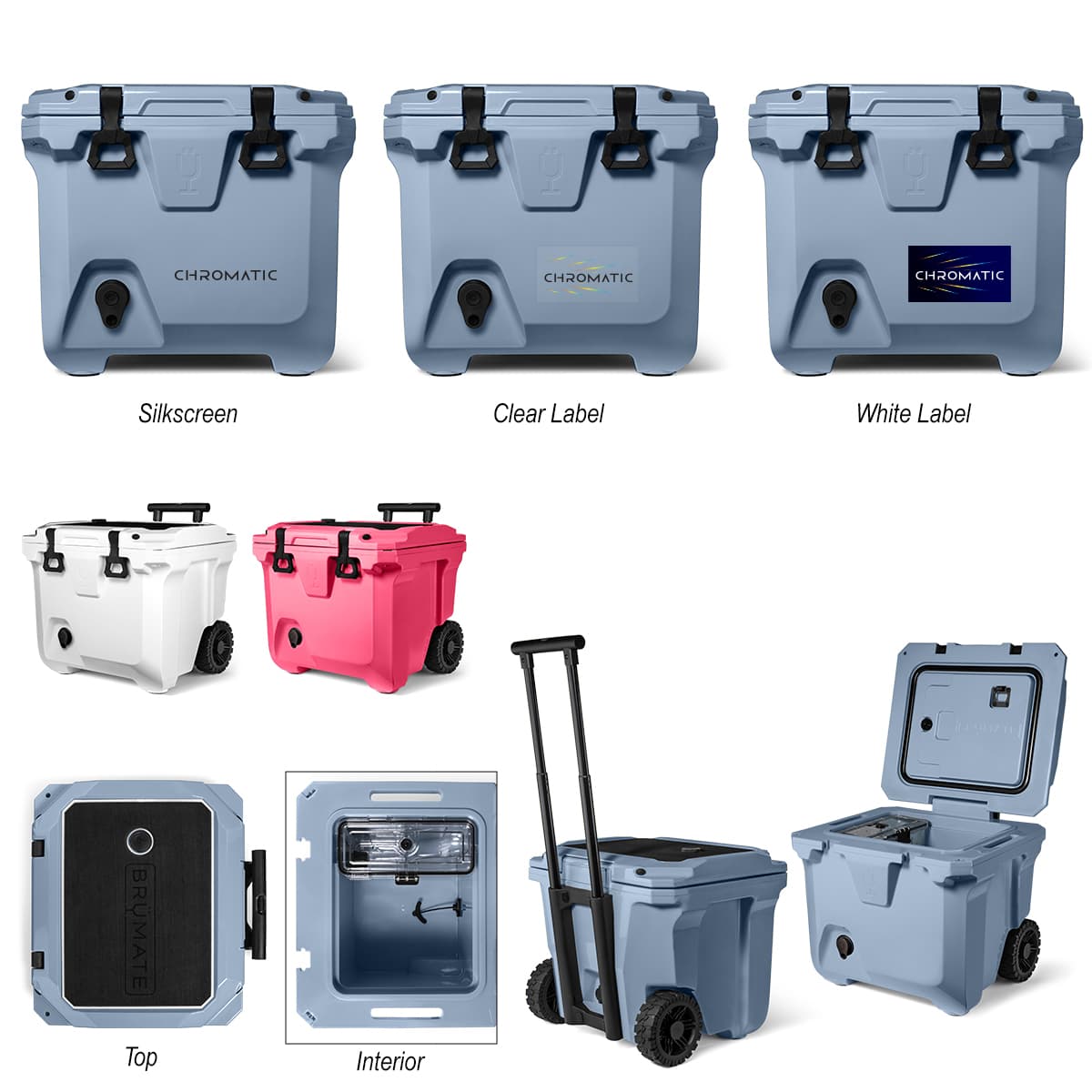
Yes, client and customer gifts are tax deductible, but only up to $25 per recipient per year. Section 274(b) of the Internal Revenue Code caps a business's deduction for gifts at $25 for each person in a tax year. Shipping, wrapping and similar incidental costs generally don't count toward the $25, and some items aren't treated as gifts at all.
The limit was set when the section was enacted in 1962, and the $25 figure has never been amended or indexed for inflation. That makes the details matter more than the headline number: who counts as the recipient, which costs sit outside the cap, and when a gift is really entertainment. This guide covers each rule as of November 2026, with a table of worked examples. For what to actually send, see our guide to corporate gifts for clients.
This guide is general information, not tax or legal advice. Your facts decide the treatment, so confirm any gift program with your CPA or tax advisor.
What Is the IRS $25 Business Gift Limit?
The IRS $25 rule limits a business's deduction for gifts to $25 per recipient per tax year, counting every gift given to that person directly or indirectly. In the words of IRS Publication 463: "You can deduct no more than $25 for business gifts you give directly or indirectly to each person during your tax year."
Three points are easy to miss:
- It caps the deduction, not the gift. You can spend $150 on a client's gift. Only $25 of the gift's cost is deductible.
- It is cumulative. A spring thank-you and a holiday gift to the same person share one $25 limit for the year.
- It applies per person, not per company. Ten contacts at one client firm can mean ten separate $25 limits, if each gift is for a specific person.
The statute also defines what a gift is for this purpose: an item the recipient can exclude from income as a gift. That definition is why gifts to your own employees fall under different rules, covered below.
Do Shipping, Packaging and Engraving Count Toward the $25?
No. Incidental costs such as engraving on jewelry, packaging, insuring and mailing are generally not included in a gift's cost for the $25 limit. According to Treasury regulations, a cost is incidental only if it doesn't add substantial value to the gift.
Customary gift wrapping qualifies. The IRS gives one counterexample: an ornamental basket used to package fruit is not incidental if the basket's value is substantial compared with the fruit. The same logic applies to any presentation box or container that is really part of the gift.
For branded gifts, ask your advisor how to treat logo decoration. The IRS names engraving on jewelry as an incidental cost, but decoration that makes up a meaningful part of an item's value may be treated as part of the gift. Our corporate gift budget benchmarks show how to separate product, decoration and delivery when you plan tiers.
Which Business Gifts Aren't Subject to the $25 Limit?
Two kinds of items are not treated as gifts under Section 274(b), so the $25 cap doesn't apply to them: low-cost imprinted items distributed widely, and signs or displays used on the recipient's business premises.
- Items costing $4 or less. The item must have your name clearly and permanently imprinted on it and be one of a number of identical items you distribute generally, such as pens handed out at a trade show.
- Signs, display racks and similar marketing material that the recipient uses on its business premises.
In practice, $4 covers very little. A logo pen fits. A branded tumbler or tote usually doesn't. If you are planning giveaways for a booth or a conference, our event and conference gift ideas cover what people keep.
Does a Gift to a Company Count as a Gift to One Person?
It depends on who the gift is really for. IRS Publication 463 says a gift to a company that is intended for the eventual personal use or benefit of a particular person, or a limited class of people, is an indirect gift to those individuals, and each one counts against their own $25 limit.
Property given to a business for use in its business, such as a technical manual, is not treated as a gift to an individual under the regulations, even if one employee mainly uses it. A gift for an undesignated member of a large group is generally not treated as an indirect gift to whoever ends up using it, unless you can reasonably identify that person.
Gifts to a client's spouse or family
A gift to a member of a customer's family is generally an indirect gift to the customer. The exception is a family member with a bona fide, independent business connection to you, as long as the gift isn't intended for the customer's eventual use.
When you and your spouse, or your partners, both give
On the giving side, a husband and wife are treated as one taxpayer for the $25 limit, whether or not they file jointly. If a partnership gives gifts, the limit applies to the partnership and to each partner, so the partnership and its partners together share one $25 limit per recipient.
Are Event Tickets a Gift or Entertainment?
Tickets you hand to a client and don't attend with them can be treated as a gift, capped at $25. Tickets to an event you attend together are entertainment, which has generally been nondeductible since 2018.
The default rule in Publication 463 is that any item that might be considered either a gift or entertainment will generally be considered entertainment. Treasury regulations carve out two exceptions that can be treated as gifts:
- Packaged food or beverages given to be used at a later time, such as a boxed set of chocolates or a bottle of wine.
- Tickets of admission to a place of entertainment, if you don't accompany the recipient.
Food and drinks at an event follow the meal rules instead. The IRS examples show that food bought separately at a game, or stated separately on the invoice, may be 50% deductible, while food folded into the ticket price is not deductible at all.
How Much Can You Deduct? Worked Examples
The deductible amount is the lower of the gift's cost or $25 per recipient for the year, plus incidental costs that sit outside the cap. The table applies the rules above to common scenarios. The gift-basket row is the IRS's own example.
| Scenario | Amount spent | Deductible as a gift | Why |
|---|---|---|---|
| A $100 gift to one client contact, shipped for $15 | $115 | $25, plus the $15 shipping | Mailing is an incidental cost and doesn't count toward the cap |
| A $40 spring thank-you and a $60 holiday gift to the same client | $100 | $25 | One limit per recipient per tax year, across all gifts |
| An $80 gift to a client and an $80 gift to the client's spouse | $160 | $25 | A gift to a family member is generally an indirect gift to the client |
| You and your spouse each send the same client a $40 gift | $80 | $25 | Spouses are treated as one taxpayer for the limit |
| Three $80 gift baskets to a company, taken home by three executives | $240 | $75 | Each basket is an indirect gift to one executive: $25 × 3 (IRS example) |
| 500 pens at $3 each with your company name, handed out at a trade show | $1,500 | Not limited by the $25 rule | Imprinted items of $4 or less, distributed generally, aren't gifts |
| Two game tickets given to a client who goes without you | $300 | Up to $25, if treated as a gift | Tickets can be a gift when you don't attend |
| The same tickets, but you attend with the client | $300 | $0 | Entertainment is generally nondeductible |
Some firms cap client gifts well below what they could spend because of the recipient's rules, not the tax rules. Financial advisors, for example, face their own limits. See our guide to the FINRA gift limit for client gifts.
Does the $25 Rule Apply to Gifts to Employees?
No. The $25 limit covers business gifts to clients and other individuals outside your payroll. Gifts to your own employees are generally treated as compensation or fringe benefits, with separate rules for gift cards, small occasional items and service awards.
Gifting your team too? Employee gifts follow different rules. Read are employee gifts taxable? before you plan year-end gifts for staff.
What Records Do You Need to Deduct a Business Gift?
To deduct a business gift, you must be able to show its cost, the date and description of the gift, its business purpose, and your business relationship with the recipient. Section 274(d) of the tax code denies the deduction without adequate records or sufficient corroborating evidence of those four elements.
Publication 463 notes that you don't always need each recipient's name: a general listing can be enough, as long as you aren't trying to get around the $25 limit for any one person. For a client list that runs to dozens or hundreds of names, an order report that ties each gift to a recipient, a date and an amount makes this much easier at year-end.
Where Do You Deduct Business Gifts on Your Tax Return?
Sole proprietors deduct business gifts on Schedule C as an other expense: list them in Part V and carry the total to line 27b. IRS Publication 463 says: "If you file Schedule C (Form 1040): … Report your gift expenses and transportation expenses, other than car expenses, on line 27b." Only the deductible part, up to $25 per recipient, goes on the return.
| Return | Where the deductible gift cost goes | What the instructions say |
|---|---|---|
| Schedule C (Form 1040) | Part V, Other expenses (line 48), total carried to line 27b | Pub 463 names line 27b for gift expenses; Part V lists each expense "not deducted elsewhere" by type and amount |
| Form 1120 (corporations) | Other deductions (line 26) | "Special rules apply to deductions for gifts": see section 274 and Pub 463. Schedule M-1 adds back "the part of business gifts over $25" |
| Form 1065 (partnerships) | Other deductions (line 21) | Same "special rules" note. Schedule M-1 lists "the part of business gifts over $25" |
The corporate and partnership instructions don't name a specific line for gifts; they point to section 274 and Publication 463 under Other deductions. Line numbers change between form years, so check the current year's instructions or ask your preparer.
Are Real Estate Closing Gifts Tax Deductible?
A closing gift from a real estate agent to a buyer or seller is a business gift, so the same $25 per recipient per year limit applies. We found no IRS guidance or court case that treats closing gifts differently from other business gifts.
You'll see claims that a closing gift can be deducted in full as advertising or treated as a reduction of the commission. Those rest on practitioner opinion, not on an IRS rule. A 2020 private letter ruling treated a brokerage's cash payments to home buyers as purchase-price adjustments, but it concerned rebates rather than gifts, and private letter rulings can't be cited as precedent. Ask your CPA before you treat a closing gift as anything other than a $25 business gift.
Is a Business Gift Taxable Income for the Person Who Receives It?
For a client, usually not: Section 102 of the tax code excludes "the value of property acquired by gift" from income. For an employee, yes: Section 102(c) says the exclusion doesn't apply to anything an employer transfers to an employee, which is why employer gift cards are taxable wages at any amount.
The line between a gift and a payment comes from the Supreme Court's 1960 decision in Commissioner v. Duberstein: a gift comes from "detached and disinterested generosity", while a transfer made mainly in anticipation of an economic benefit isn't a gift. A thank-you after a year of work is usually the first; a reward tied to a specific referral can look like the second.
On reporting: for payments made after December 31, 2025, the threshold for most Form 1099-MISC and 1099-NEC reporting rose from $600 to $2,000 a year. The 1099 instructions don't address gifts, so whether a large client gift or a referral reward needs a form is a question for your CPA.
How Should the $25 Rule Shape Your Client Gift Budget?
Treat the $25 rule as a tax fact, not a spending guide. Most companies budget client gifts on the value of the relationship and accept that only $25 per person is deductible. The bigger constraints are usually the recipient's own gift policy and your records.
Many recipients face their own limits. Law firms, financial firms and public-sector clients often have strict policies on what they can accept, which our guide to law firm client gifts covers in detail. A useful habit is to set tiers by relationship, then check each tier against the recipient's rules before you choose products.
A corporate gifting pop-up shop can keep that organized. With Idea Tree, each client opens one link, picks a gift from a curated selection of premium brands such as Patagonia, YETI, Stanley and The North Face, and enters their own address. Each tier can have its own selection. Idea Tree ships every gift individually and sends one consolidated invoice. Ask your gifting expert what order detail your finance team will receive for its records. Once Idea Tree has your brief and your logo, your shop is live within 24 hours. See how it works.
Not tax advice: this summarizes federal rules as of November 2026. Confirm deductions and recordkeeping with your CPA or tax advisor.
Frequently Asked Questions
Are business Christmas gifts tax deductible?
Holiday gifts to clients and other business contacts are deductible up to $25 per recipient for the tax year, the same as any other business gift. The holiday gift shares that $25 with anything else you gave the same person during the year. Gifts to employees follow separate compensation and fringe-benefit rules.
Are customer gifts tax deductible?
Yes. Gifts to customers, clients and other business contacts are deductible as business gifts up to $25 per recipient per tax year. Shipping, packaging and engraving generally don't count toward the $25, and items costing $4 or less with your name imprinted that you hand out widely aren't treated as gifts at all.
Where do I deduct business gifts on Schedule C?
List the deductible amount, up to $25 per recipient per year, in Part V (Other expenses) and carry the total to line 27b, which is where IRS Publication 463 says gift expenses go for Schedule C filers. Line numbers can change between form years, so check the current instructions.
Are real estate closing gifts tax deductible?
Yes, as business gifts, up to $25 per recipient per year. There's no IRS guidance treating closing gifts differently. Treating one as advertising or as a reduction of the commission rests on practitioner opinion, so confirm with your CPA first.
Are gift cards taxable income?
For employees, always: the IRS says gift cards from an employer are never a tax-free de minimis benefit, whatever the amount, and they're reported as wages. For a client, a genuine gift is generally excluded from income under Section 102, though no IRS text addresses client gift cards specifically.
Is the $25 gift limit per gift or per year?
Per year. The limit applies to the total of all business gifts you give, directly or indirectly, to one person during your tax year. Two gifts to the same client in one year share a single $25 limit.
Are gift cards to clients deductible?
No IRS text addresses gift cards to clients specifically, but Section 274(b) applies to any business gift with no exception for cash or gift cards, so the reasonable reading is the same $25 per recipient per year limit. Gift cards to employees are a different matter: the IRS treats them as cash equivalents and taxable wages at any amount.
Has the $25 business gift limit ever been raised?
No. The $25 limit was part of Section 274 when Congress enacted it in 1962, and the amount has never been amended or adjusted for inflation. As of November 2026, it remains $25 per recipient per year.
Can I deduct a gift sent to a client's office for the whole team?
It depends on who it is for. Under the Treasury regulations, a gift intended for particular individuals counts against each person's $25 limit, while property for the business's own use, or for an undesignated member of a large group, is generally not treated as a gift to an individual. Ask your tax advisor how to treat a specific gift.
Sources
- Instructions for Schedule C (Form 1040), 2025 — IRS
- Instructions for Form 1120, 2025 — IRS
- Instructions for Form 1065, 2025 — IRS
- 26 U.S. Code § 102: Gifts and inheritances — Cornell Law School, Legal Information Institute
- Commissioner v. Duberstein, 363 U.S. 278 (1960) — Cornell Law School, Legal Information Institute
- Instructions for Forms 1099-MISC and 1099-NEC — IRS
- Publication 15-B (2026), Employer's Tax Guide to Fringe Benefits — IRS
- Publication 463 (2025), Travel, Gift, and Car Expenses (Chapter 3: Gifts) — IRS
- 26 U.S. Code § 274: Disallowance of certain entertainment, etc., expenses — Cornell Law School, Legal Information Institute
- 26 CFR § 1.274-3: Disallowance of deduction for gifts — Cornell Law School, Legal Information Institute
- 26 CFR § 1.274-2: Disallowance of deductions for certain expenses for entertainment, amusement, recreation, or travel — Cornell Law School, Legal Information Institute
Trusted by law firms including Fish & Richardson, Weil, Gotshal & Manges and Bradley.